We provide mobile speech pathology services for adults with neurological conditions such as:
- Stroke
- Acquired Brain Injury (ABI)
- Progressive Neurological Conditions (e.g. Dementia, Parkinson’s Disease)
We offer the following services:
- Comprehensive assessment of communication and swallowing
- Individual treatment sessions/programs
- Group therapy programs
- Telehealth sessions
- Comprehensive report writing
Service Locations
Being a mobile service, we can come to your home, workplace, or other community setting. We are able to provide services within Greater Brisbane suburbs which are south of the Brisbane CBD (See catchment area outlined in red below). Our catchment spans from Ipswich (West) to Redlands (East), and down to Beenleigh (South).
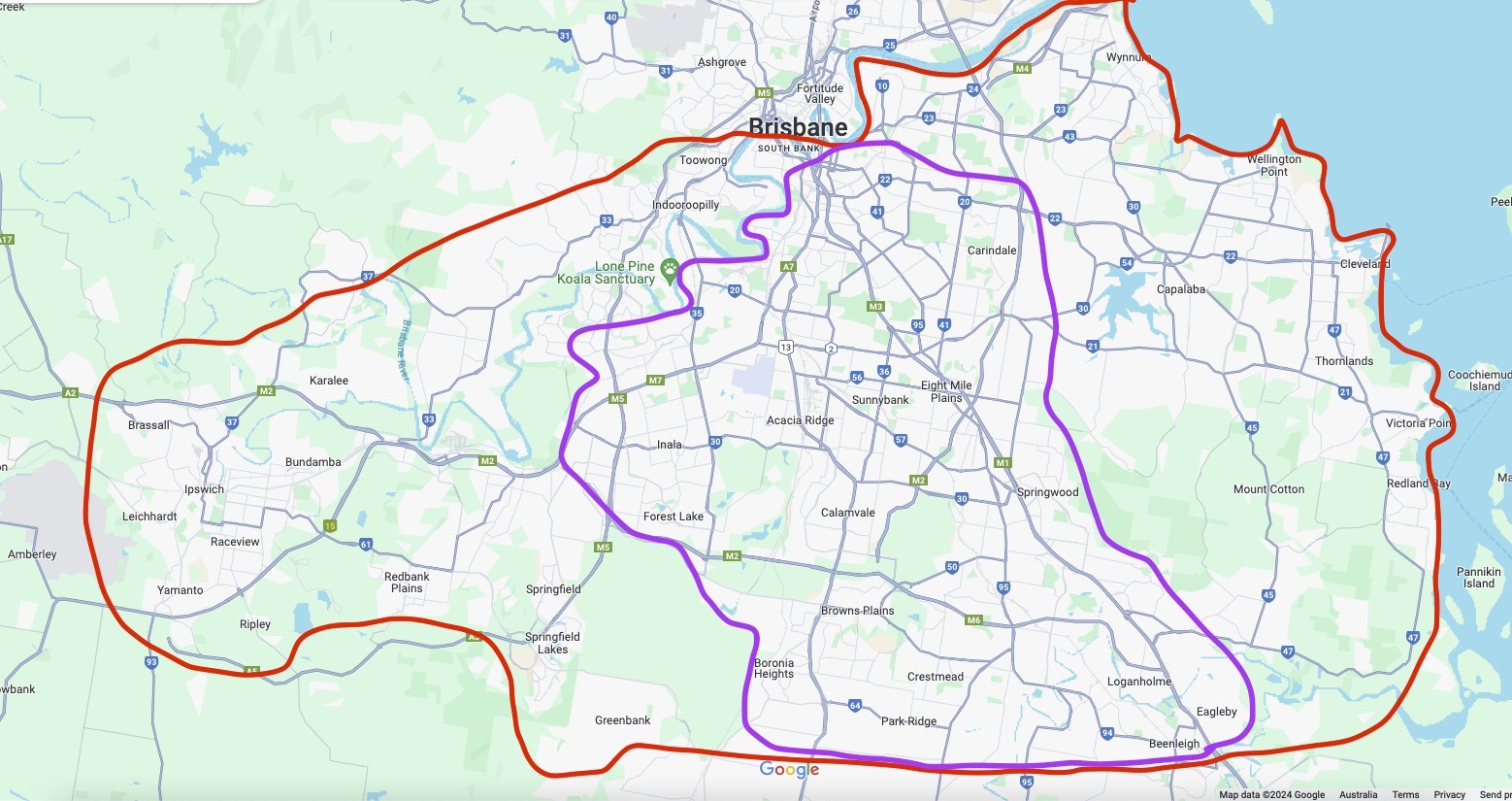
FOR NDIS PLAN-MANAGED CLIENTS – From 1st July 2025, the catchment area for NDIS plan-managed clients will change. These changes have arisen from the recent NDIS funding cuts for provider travel. This new NDIS plan-managed catchment area is outlined above in purple. This catchment spans from Woolloongabba down to Beenleigh (South), and from Wacol (West) out to Carindale (East). Narrowing this catchment will ensure that sustainable, evidence-based services can be delivered, in line with the NDIA travel pricing limits. NDIS services outside the purple catchment, but within the red catchment, may be delivered on a case-by-case basis. Clients with other funding sources (e.g. NIISQ, HCP, NDIS self-managed) remain unaffected by this change.
Why Mobile Services?
There are many reasons why speech therapy should be delivered at home or in the community. It can be more convenient for clients who have difficulties with travel. But also, it can allow for the transfer and generalisation of skills into everyday real-life situations and environments.
For example, if you want to work on your ability to order a meal, we can do speech therapy in a cafe! If you have difficulty with communicating at work, we can meet you there! If communication at home with family members is difficult, we can implement strategies in your home!
Providing speech therapy at home or in the community is also supported by research and therapy guidelines. This is why we focus primarily on mobile services.
What can we help with?
Speech Difficulties
Neurological conditions such as stroke, brain injury or Parkinson’s Disease can lead to difficulties with speaking clearly. Some of the main speech difficulties that can occur are:
- Dysarthria – unclear or slurred speech due to muscle weakness
- Apraxia of Speech – speech difficulty caused by faulty communication between the brain and the speech muscles.
Language Difficulties (Aphasia)
Aphasia is a language disorder caused by damage to the language centres of the brain. It is typically a result of stroke or brain injury, although sometimes it can occur within a type of dementia (Primary Progressive Aphasia).
Aphasia can affect all modalities of language – speaking, listening, reading and writing.
Aphasia may present with the following difficulties:
- Difficulty with finding the right words
- Problems with forming sentences
- Difficulties with understanding questions or instructions
- Issues with spelling words or writing sentences
- Problems with reading words, sentences, or longer texts.
Cognitive-Communication Difficulties
Cognitive-communication disorders are communication difficulties which are caused by cognitive deficits (e.g. difficulties with memory, attention, processing information etc.). Cognitive-communication disorders frequently occur with stroke, brain injury and dementia.
Cognitive-communication disorders can present in many ways. Some signs and symptoms may include:
- Problems with expressing yourself in an organised and clear way
- Issues with starting or contributing to conversation
- Troubles with staying on topic in conversation
- Difficulties with remembering information that you have read or heard
- Challenges with expressing yourself succinctly
- Issues with concentrating in conversation
- Problems with understanding and/or using non-verbal communication, such as facial expression or body language
- Difficulties with being socially appropriate with others
- Misinterpreting what others say
- Challenges with recognising your own impairments
Swallowing Disorders (Dysphagia)
Dysphagia commonly occurs with many neurological conditions. Some signs of dysphagia may include:
- Coughing or choking during or after eating/drinking
- Food becoming stuck in the throat
- Difficulties with clearing food/drink from mouth
- Issues with chewing foods
- Increased time to finish meals
- Unexplained or recurrent chest infections
- Weight loss and/or dehydration
Dysphagia can lead to very serious health complications such as aspiration pneumonia, which could require a hospital admission. If you suspect that you or someone you know has difficulties with swallowing, please refer to a speech pathologist as soon as possible.